Responsible Mosquito Control Approaches
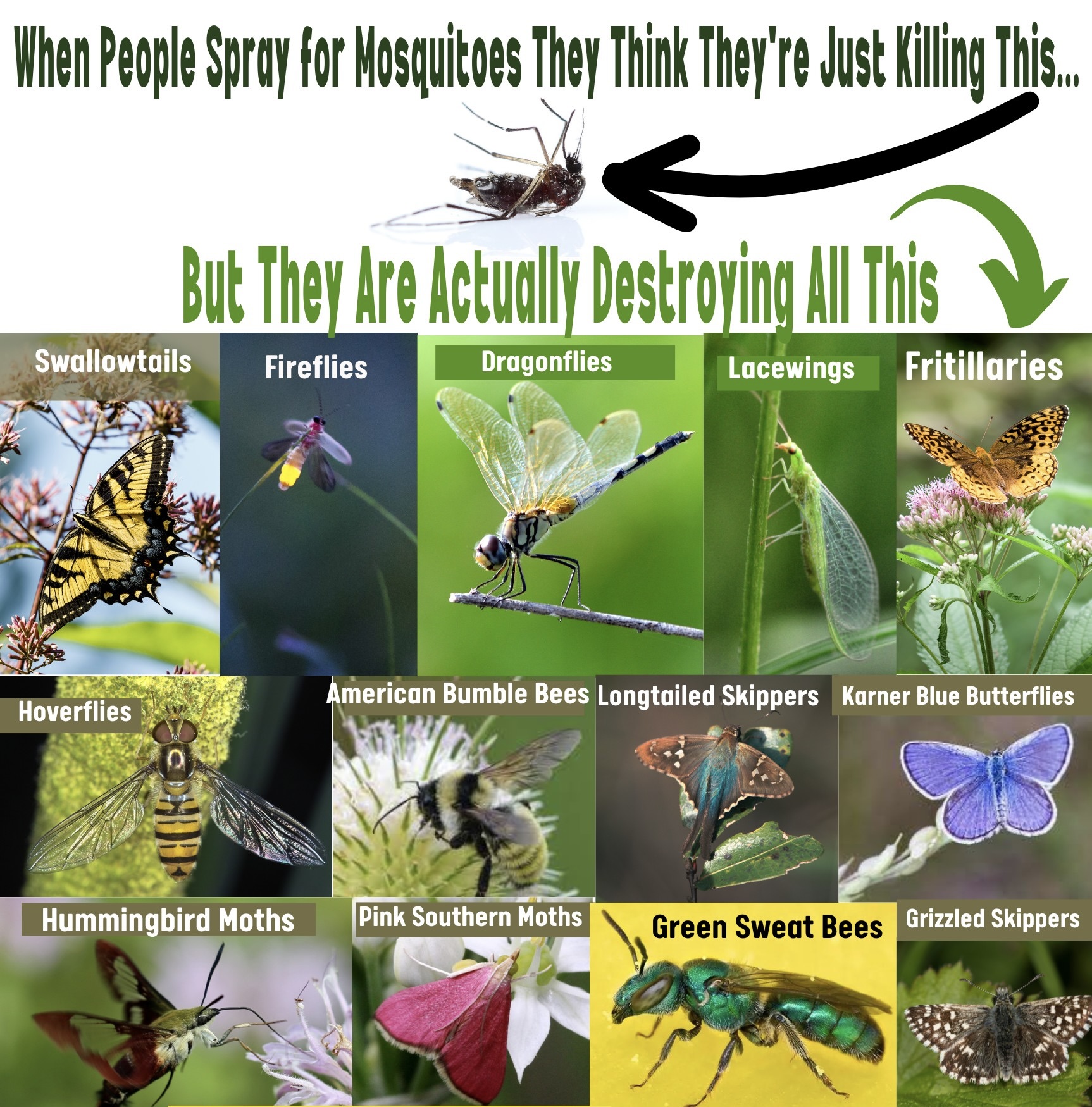
Summary: "Mosquito fogging doesn't work." Doug Tallamy, Chair of Department of Entomology, University of Delaware
Description
Broad spraying of insecticides for mosquitoes is both ineffective and harmful to the environment. It has been noted by leading entomologist that fogging for adult mosquitoes is ineffective and there are better ways to control mosquitoes. Spraying any insecticide on a broad area can kill beneficial insects (and other arthropods). There are alternatives to spraying for adults such as larva traps, repellents, etc. that are effective and do not harm the environment.
An interview with a noted entomologist on the ineffectiveness of broadcast spraying for mosquitoes and alternative solutions - https://mygreenmontgomery.org/2023/an-interview-with-experts-are-backyard-mosquito-sprays-safe-and-effective/
Deep Dive
Steps to Take
Responsible mosquito control choices focus on reducing mosquito populations and preventing bites while minimizing harm to the environment, beneficial insects, and human health. Here are some effective and eco-friendly mosquito control strategies:
1. Eliminate Breeding Sites
- Remove Standing Water: Mosquitoes lay eggs in stagnant water, so regularly empty and clean containers like birdbaths, plant saucers, clogged gutters, and old tires where water can collect.
- Drain or Fill Low Areas: Level or fill in low-lying areas in your yard where water tends to pool after rain.
- Use Larvicides in Water: In ponds or rain barrels, use mosquito dunks or pellets containing Bacillus thuringiensis israelensis (Bti), a naturally occurring bacterium that kills mosquito larvae but is safe for other wildlife and pets.
2. Natural Predators
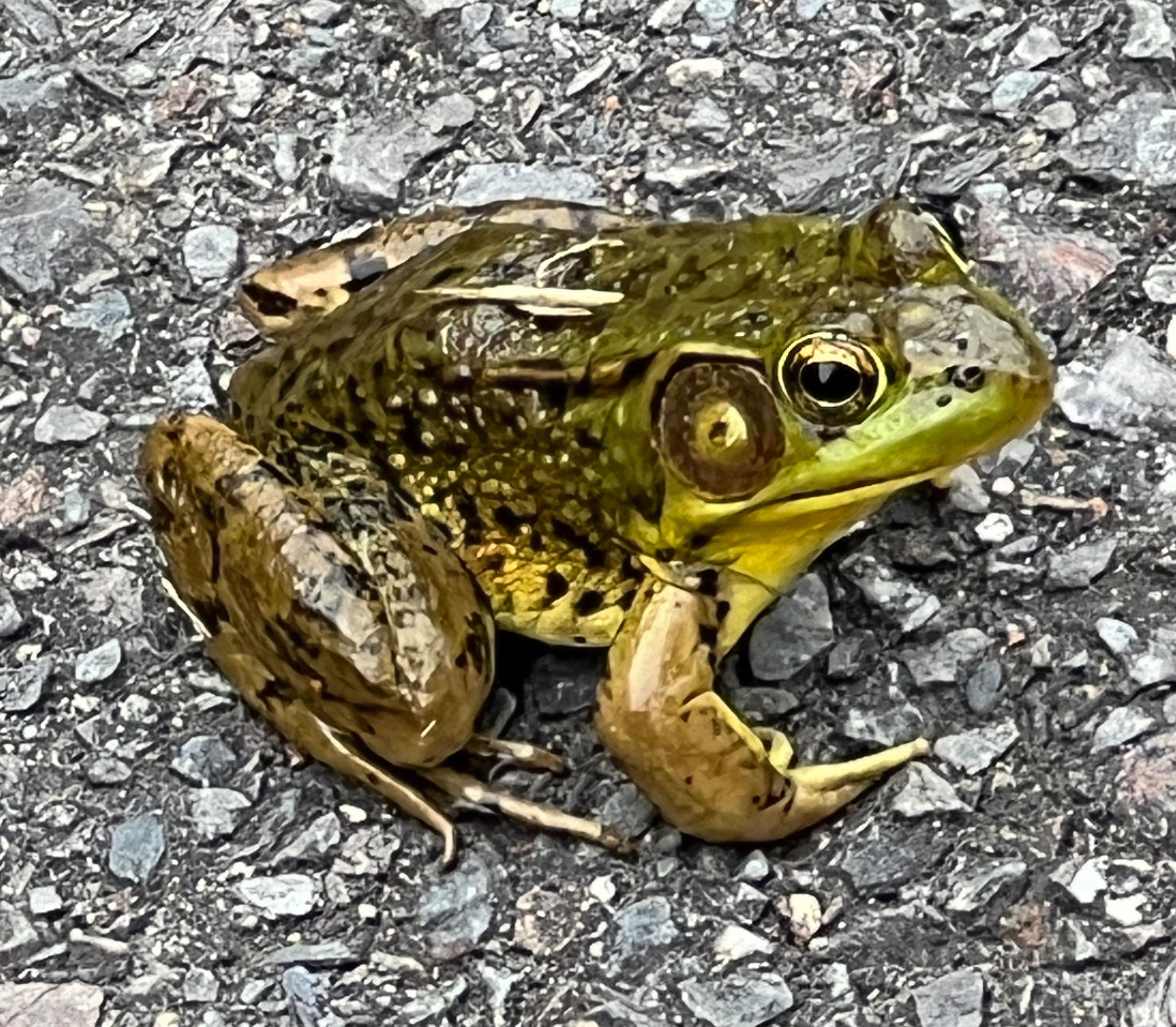
- Encourage Predatory Wildlife: Support natural mosquito predators, such as bats, birds, dragonflies, and frogs, by creating a habitat that attracts them (e.g., bat houses, birdbaths, ponds).
- Stock Fish in Ponds: Introduce mosquito-eating fish into garden ponds or water features to naturally control larvae.
3. Biological Control
- Bacillus thuringiensis israelensis (Bti): As mentioned, Bti targets mosquito larvae specifically and is a safe, targeted approach to reducing mosquito populations.
4. Physical Barriers
- Screens and Netting: Use window and door screens to keep mosquitoes out of your home. Consider using mosquito netting over beds or outdoor seating areas.
- Wear Protective Clothing: In areas with high mosquito activity, wear long sleeves, long pants, and socks to reduce skin exposure.
5. Eco-Friendly Repellents
- Permethrin-Treated Clothing: Wear clothing treated with permethrin, a repellent that is effective against mosquitoes and other biting insects, but avoid direct skin contact with permethrin.
6. Pest Management
- Monitoring and Targeted Action: Regularly monitor mosquito activity and focus control efforts in areas where mosquitoes are most problematic, reducing the need for broad-spectrum pesticide use.
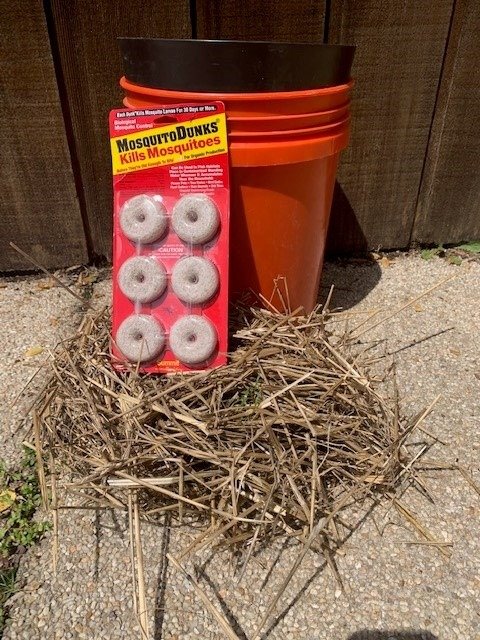
- Make a Mosquito Bucket of Doom:
A Mosquito Bucket of Doom is just
a bucket of water +
handful of grass +
a stick +
a Bti dunk.
How it works:
The grass in the water rots—releasing carbon dioxide—and attracts mosquitoes ready to lay eggs, but the Bti dunk in the water kills the larvae after they hatch. No new adult mosquitoes will emerge. Bti is a larvicide targeted for mosquitoes. It kills the larval stage (not the egg or pupal or adult stages). It will not harm anything else. Lightning bugs, birds, butterflies, frogs, mammals, etc. are safe. One dunk treats 100 square feet of water for at least 30 days, says the package. Buckets have fewer than 2 square feet of water, so I break one dunk into 4 parts.
Each 1/4 dunk lasts longer than 30 days, but it is easier to simply add a new 1/4 on the first day of each month.
7. Avoid Harmful Practices
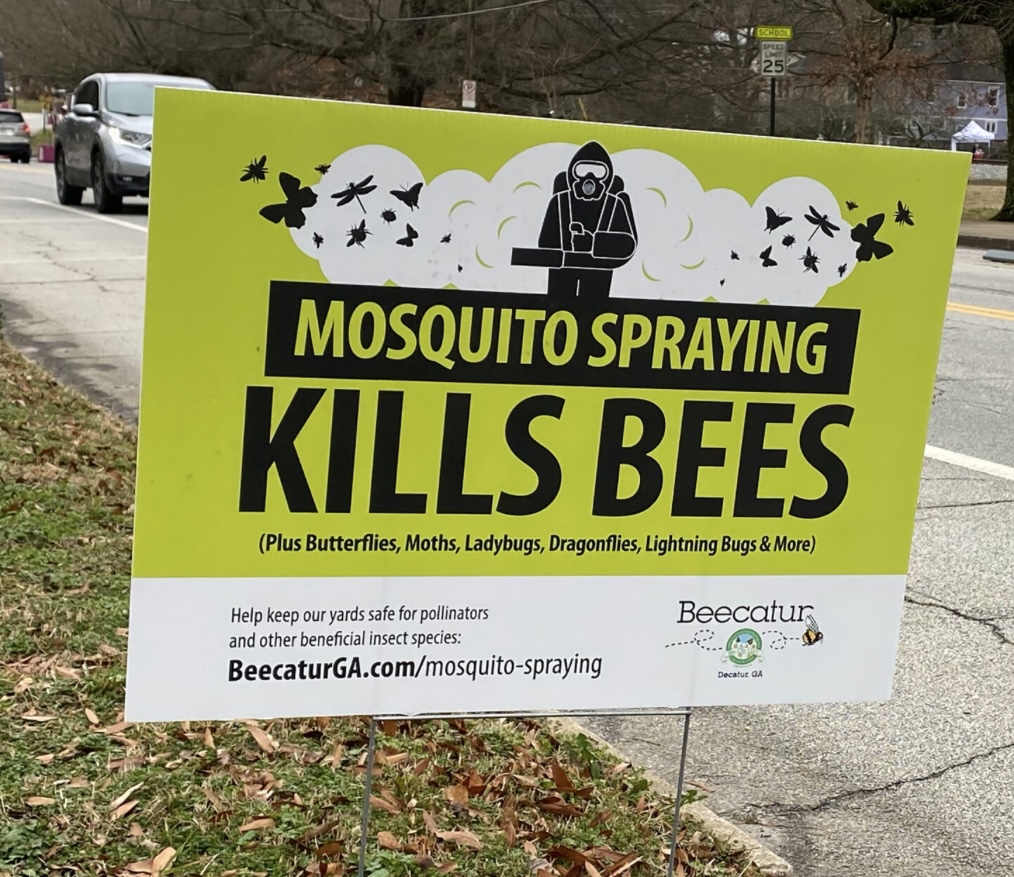
- Avoid Broad-Spectrum Pesticides: Refrain from using non-selective chemical pesticides that can harm beneficial insects, pollinators, and other wildlife.
- Avoid Fogging or Spraying: Fogging and spraying broad-spectrum insecticides can kill non-target species and may have limited effectiveness against mosquitoes.
8. Personal Protection
- Use DEET Repellents: This is effective at repelling mosquitoes and are safe when used according to label directions.
- Avoid Peak Mosquito Activity: Limit outdoor activities during dawn and dusk when mosquitoes are most active.
By combining these responsible mosquito control practices, you can effectively reduce mosquito populations and the risk of bites while protecting the environment and supporting local ecosystems.
- All Actions